

3/6
Hall of Fame FIFA World Cup™ Creative
From kits to mascots, learn how FIFA World Cup™ design and storytelling leave a lasting mark.
Okay, so in the last learning module,
we talked about professional creativity,
so now let's see some of that work in action through the lens of the FIFA World Cup™.
I'm going to share some of my favorite examples of FIFA World Cup™ Creative
and why it really made such an impression on me.
The great thing about creative work is, it's all a matter of era and personal preference,
but these are some of my favorites.
And I think they help tell some of the story of just how much creative work exists around a tournament of this size.
Okay, let's start with my favorite type of FIFA World Cup™ creative, the kits.
A kit actually refers to the entire uniform of a soccer team,
jersey on top, shorts on the bottom, accessories like socks and shin guards.
That's what we call the full kit.
But over the years, it's often become shorthand for just the jersey.
Why do I love designing kits?
Think about it.
You get to design something that is there every step of the way for the most iconic moments in FIFA World Cup™ history.
Let's take a look at a couple of my all-time favorite FIFA World Cup™ kits,
not including the ones I've designed.
We'll talk about those a little later.
West Germany 1990 Home Kit.
This one is all time.
Stripes have been a theme since the very first kits were designed, but this offered an entirely new take on them.
Instead of horizontal or vertical stripes,
it used this kind of crazy, almost-geometric sash pattern,
and it was asymmetrical, which creates even more visual interest.
Since 1990, those ideas have been endlessly referenced by other nations, clubs, and teams, even street wear brands,
including in the design of Germany's 2026 kit.
Getting referenced is a surefire way to ensure iconic status.
Plus, this kit is instantly recognizable as representing Germany, while being a cool piece of merch.
If you can do both of those things, you've nailed a FIFA World Cup™ kit.
United States 1994 Home Kit.
Whew, this is a wild one.
What's funny is, since I was too young to watch this tournament live,
this kit itself is one of my earliest memories of US Soccer.
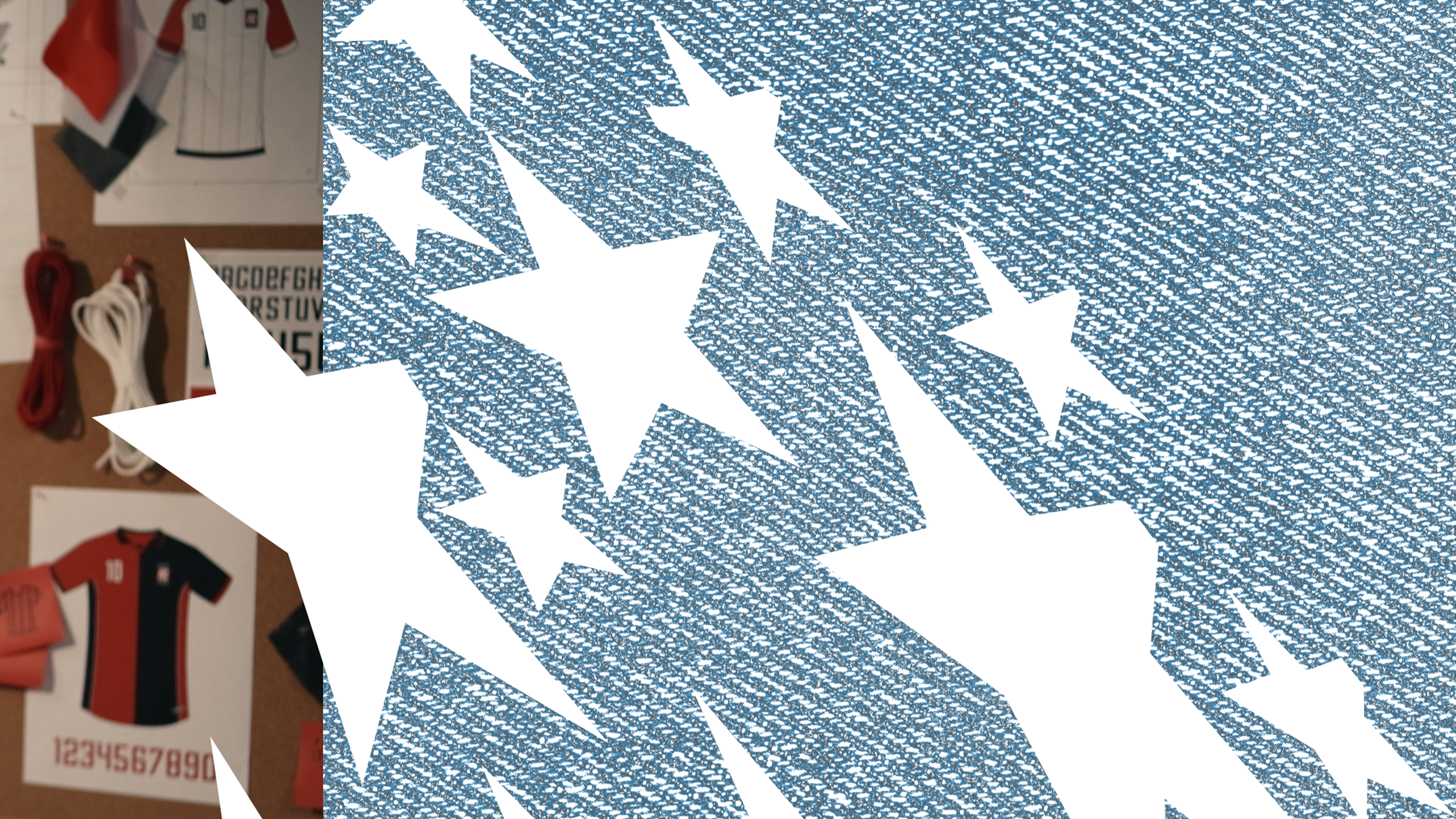
Known as the denim kit for the unique blue-textured pattern,
which looks like a classic pair of American blue jeans.
It offers a totally original interpretation of the flag,
focused in on just the stars and blue aspect.
The US at the time could get away with a riskier design because we were the new kids in global soccer.
We didn't even have our own pro league yet.
So while a home-England kit is always white or a home-Brazil kit is always yellow,
our designers could define what a US kit should be, and the red shorts, underrated touch.
Next up, my favorite FIFA World Cup™ ads.
Developing broadcast ads for the FIFA World Cup™ is a huge opportunity, but a unique challenge.
Such a wide audience will be watching, oftentimes speaking different languages and having different cultural backgrounds.
I think the most successful FIFA World Cup™ ads focus on universal storytelling,
creating something that resonates with everybody.
A great example of this is One World, One Game,
created by Coca‑Cola around the 2014 FIFA Worlds Cup™ in Brazil.
This ad touches on what great creative can do,
but also what great FIFA World Cup™ creative more specifically can do.
Let's watch it together quickly.
Goosebumps, right?
This spot casts a very wide net.
The writers have been careful to tell a story that is authentic,
not just to soccer,
not even just to Brazilian soccer culture,
but to a very specific community,
and to use that story as a backdrop to invite the entire world to see the game through their eyes.
On some level, this is what the FIFA World Cup™ itself does.
It invites us to gather, to see things from each other's perspective, and to celebrate the game and all it has to offer.
Coca‑Cola recognized that even though there's "One World, One Game",
that game has different flavors and meanings as diverse as the nations who participate, and that is something to celebrate.
Last but not least, my favorite World Cup mascots.
Okay. Are sports mascots always the highest level of artistic expression?
No.
But do we love them?
Yes.
And do they require creative input?
Absolutely.
Most FIFA World Cup™ mascots have some symbolism drawn from the host country, which graphic designers work hard to distill into a friendly mascot.
The design needs to be able to appear in different ads, merchandise, and even be fabricated into a costume.
Lots of good ones to choose from.
Naranjito, the orange from Spain 82,
or as a kid growing up in the 90s,
Striker the dog from USA 94,
but I need to be honest, I really like Footix from France 98.
I'm personally a fan of big, chunky line art and bold colors as opposed to really intricate details.
It helps the mascot translate better from the illustration to the costume.
Okay, from kits to commercials, those were some of my favorite FIFA World Cup™ creative executions.
Maybe FIFA World Cup 26™ will produce some new classics too.
Let's move on to the next course where I'm going to talk to you about the art of
designing a soccer team logo, also known as a crest.
(soft upbeat music)